
If you’re shopping for a new garage floor, shop floor, or basement coating in the Quad Cities, the first question is almost always about price. This guide breaks down what epoxy flooring cost in Prescott AZ actually looks like in 2026, what drives the number up or down, and how to avoid paying twice for a floor that peels in a year.
What You’ll Actually Pay for Epoxy in Prescott in 2026
Professional epoxy floor coating in the Prescott area typically runs between $5 and $12 per square foot installed. That’s the honest range for residential work done by a licensed contractor with proper prep. A standard two-car garage of around 400 square feet usually lands somewhere between $2,000 and $4,800. A three-car garage of 600 square feet often falls between $3,000 and $7,200.
Commercial jobs, big shops, and decorative systems can push higher. Small rooms and simple solid-color coatings sit at the lower end.
Here’s a quick look at the most common projects people in Prescott, Prescott Valley, and Chino Valley ask about.
| Project Type | Typical Size | Price Range (Installed) |
|---|---|---|
| Two-car garage, solid color or light flake | 400 sq ft | $2,000 to $3,600 |
| Three-car garage, full-flake system | 600 sq ft | $3,600 to $6,600 |
| RV garage or detached shop | 800 to 1,200 sq ft | $4,800 to $12,000 |
| Basement, laundry room, or utility space | 200 sq ft | $1,500 to $2,800 |
| Patio or covered outdoor concrete | 300 sq ft | $1,800 to $4,500 |
| Small commercial space | 1,000 to 2,500 sq ft | $7,000 to $25,000 |
These are 2026 ranges for professional installs in Yavapai County. They include diamond grinding prep, primer, base coat, flake or color, and a topcoat. They do not include concrete repair if your slab needs it.
What Actually Drives the Price Up or Down
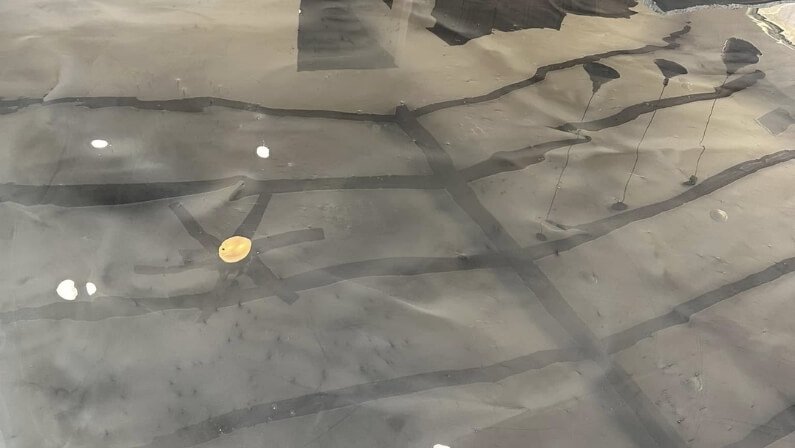
A lot of people see a $2,500 quote from one company and a $5,500 quote from another for the same garage. The gap is almost always in the prep, the product, and the warranty. Here’s what moves the number.
Square Footage
The biggest single factor. Bigger floors cost more in materials and labor, but the per-square-foot price often drops as size goes up. A 400 sq ft job might come in at $8 per foot. A 1,200 sq ft job might drop to $6 per foot because the crew, grinder, and mobilization get spread across more area.
Floor Condition and Prep
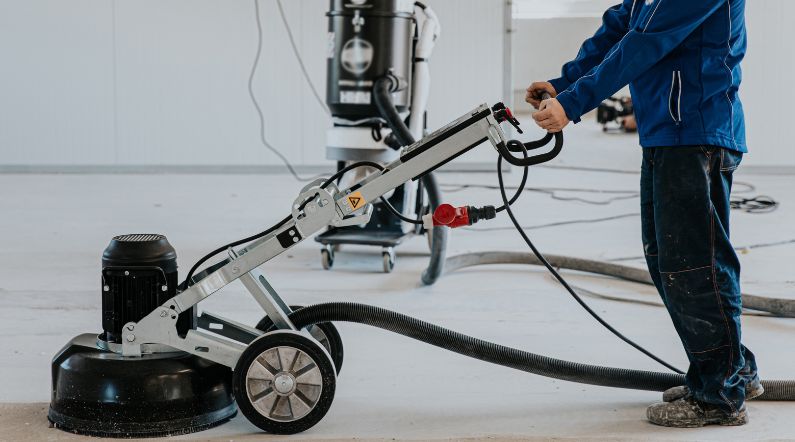
This is where cheap quotes turn into expensive regrets. A proper epoxy install starts with diamond grinding, which opens up the concrete so the coating can actually bond. Acid etching is the shortcut some companies use to save time, and it’s the number one reason garage floors peel two years later.
If your slab has cracks, pitting, oil stains, or old failed coatings, those have to be addressed before the new coating goes down. Crack repair, patching, and stripping an old coating can add $1 to $3 per square foot. Our pro team at Prescott Epoxy Company always grinds first, no shortcuts.
Coating System
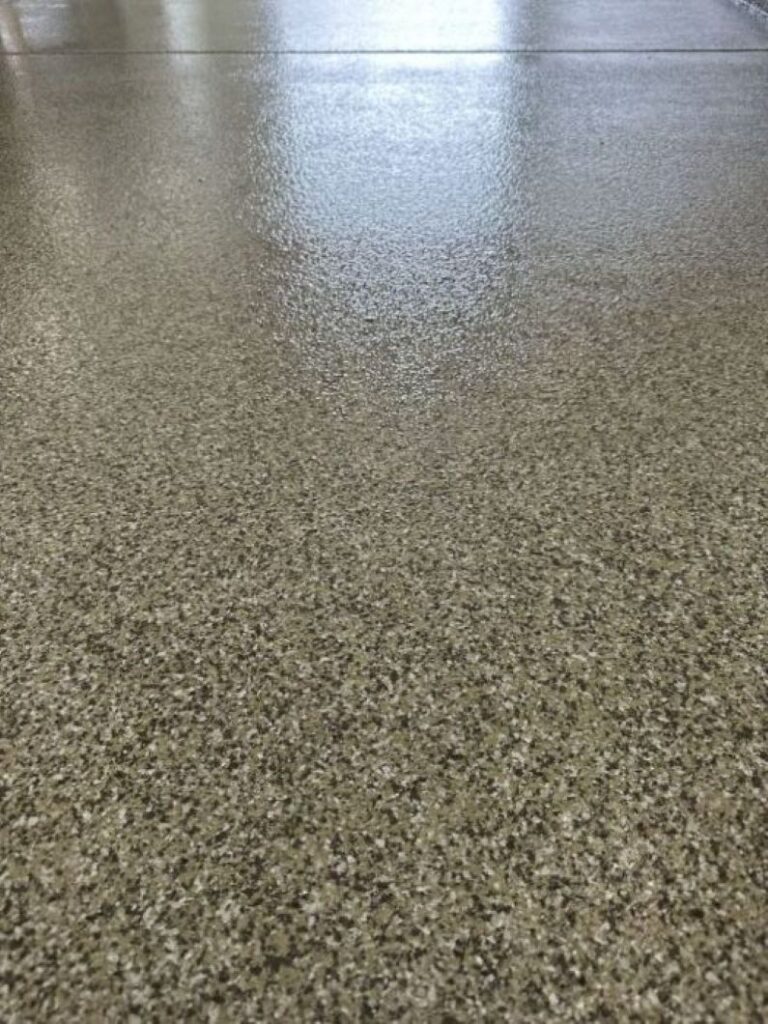
A basic solid-color polyurea or epoxy is the most affordable. Full-flake systems with decorative vinyl chips cost a little more. Quartz broadcast systems, metallic epoxy, and custom designs sit at the top of the range. Check out our guide to epoxy garage floor coatings for a deeper look at the options.
Color, Flake, and Design Choices
Standard flake blends cost less than custom color matches or designer flake systems. Metallic swirls, logo inlays, and multi-color patterns take more time and material, so they push the price up.
Warranty and Contractor
A 10-year warranty from a licensed, insured, local shop costs more than a DIY kit or a fly-by-night crew passing through town. That’s not a markup. That’s the cost of materials, labor, and accountability that actually stand behind the floor.
DIY Kit vs Professional Epoxy in Prescott
Box store kits are tempting. They’re cheap, they’re easy to grab on a Saturday, and the label makes big promises. Here’s the honest comparison.
| Factor | DIY Kit from a Big Box Store | Professional Install |
|---|---|---|
| Upfront cost for a 2-car garage | $200 to $500 | $2,000 to $3,600 |
| Surface prep | Acid etch (the kit’s included pouch) | Diamond grinding |
| Product thickness | 6 to 10 mils (paper-thin) | 20 to 40 mils (multiple coats) |
| Expected lifespan in Prescott climate | 1 to 3 years | 10 to 20 years |
| Warranty | Limited product warranty | 10-year installation warranty |
| Cost if it fails and you redo it professionally | Add $2,000 to $4,000 later | Already done right |
When you run the math, the DIY kit often costs more in the long run. Grinding off a failed coating and starting over is more work than just doing it right the first time. That’s why most of the calls we get in Prescott Valley and Chino Valley are from folks who tried a kit, watched it peel, and are ready to invest in something permanent.
Why Prescott’s Climate Changes the Math
Epoxy flooring cost in Prescott AZ is shaped partly by our weather. Prescott sits at about 5,400 feet, which means big temperature swings, freeze-thaw cycles in winter, and dry heat in summer. Garage concrete here expands and contracts more than concrete in lower desert cities like Phoenix.
That movement is tough on thin coatings. It’s why a cheap kit that might last five years in a mild coastal climate will crack in 18 months in a Prescott garage. A professional full-thickness coating with proper prep handles our climate the way it’s supposed to.
If you’re in Sedona or the Verde Valley, the climate is a little milder, but the same prep rules apply. Check out our Sedona epoxy coating services page for area-specific info.
Hidden Costs Nobody Tells You About
Here are a few line items that can catch you off guard if your quote doesn’t spell them out.
Concrete repair. If your slab has cracks wider than a hairline, spalling, or holes from old anchors, those get patched before coating. That’s usually $150 to $800 depending on severity.
Old coating removal. If someone already rolled paint, an old epoxy kit, or a sealer onto your floor, it has to come off. Stripping and grinding an existing coating usually runs $1 to $3 per square foot on top of the install price.
Moisture testing. Prescott concrete is usually dry, but slabs on grade with drainage issues can have moisture pushing up through them. A moisture test is cheap or free, and it tells you whether you need a moisture-mitigation primer, which adds cost but prevents failure.
Extra square footage. People often forget the walls of a stem wall, the entry steps, or a side storage room. Walk the space with your estimator and add everything you want coated.
Getting an Accurate Quote Without the Hassle
A good estimate takes about 20 minutes. Here’s what to expect when you call a licensed Prescott contractor.
First, measurements. Length times width, plus any stem walls or extra areas. Second, a look at the slab for cracks, pitting, old coatings, or moisture. Third, a conversation about color, flake, and finish. Fourth, a written quote with the prep, product, warranty, and timeline spelled out.
If a company won’t grind your floor, won’t put the warranty in writing, or can’t show you samples, keep shopping. You can see samples in person at our showroom at 1030 Sandretto Dr, Suite K in Prescott. It’s the only epoxy showroom in the area, and picking a color off a physical sample is a lot different than picking one off a phone screen.
For a full service overview and a quick online estimator, visit our epoxy coatings service page or our Prescott Valley epoxy coating page.
Is It Worth the Money?
Most homeowners who invest in a professional epoxy floor say the same thing: they wish they’d done it sooner. A good coating seals out oil, gas, antifreeze, and salt from winter driving. It sweeps and mops clean. It holds up to jack stands, dropped tools, and dog claws. It adds resale value. And because it’s the only floor you’ll ever need in that space, the 10-year warranty usually becomes a 15 or 20 year floor in real life.
If you want a deeper look at what homeowners actually get from a professional coating, our residential epoxy guide walks through the full picture. And if you want the pillar overview of every coating type we install, our ultimate guide to epoxy floor services covers it all.