
Residential epoxy flooring turns plain concrete into a tough, glossy surface that holds up to daily life and looks great doing it. If you have been wondering whether it is worth the investment, this guide covers everything from how it works to what it actually costs in the real world.
What Is Residential Epoxy Flooring, Exactly?
Epoxy is a two-part coating system made from a resin and a hardener. When you mix them together and apply them to concrete, a chemical reaction happens that creates a surface much harder than paint or standard sealers. The result is a floor that bonds directly to the concrete below and resists stains, impacts, and moisture.
Most homeowners use it in garages, basements, laundry rooms, and workshops. But more people are now bringing it into kitchens, mudrooms, and even living spaces because of how clean and modern it looks.
How Does the Installation Process Work?
The installation process matters a lot for how well the floor holds up over time. Skipping steps here is the number one reason DIY epoxy fails.
Surface Preparation
Before any coating goes down, the concrete has to be properly cleaned and profiled. That usually means diamond grinding or shot blasting the surface so the epoxy has something to grip onto. Any cracks or spalling get filled in at this stage too. If the surface prep is not done right, the coating will peel, no matter how good the product is.
Primer and Base Coat
Once the concrete is ready, a primer goes down first. This seals the pores and helps the base coat stick. The base coat is where the color and bulk of the coating gets applied.
Decorative Flakes or Quartz
Most homeowners choose to add decorative flakes or a quartz broadcast into the wet base coat. This adds grip, hides minor surface imperfections, and gives the floor a speckled look that is popular in garages and basements. If you want something a little different, check out quartz epoxy flooring systems in Prescott, AZ for a textured finish that holds up especially well in high-traffic areas.
Topcoat
A clear topcoat seals everything in. This is what gives the floor its gloss and protects the color layer underneath. Topcoats also add chemical resistance, which matters if you park cars or use cleaning products on the floor regularly.
How Long Does It Take?
Most residential jobs take one to two days for installation, plus cure time. You will typically need to stay off the floor for 24 hours and avoid heavy use for about 72 hours. Full cure takes about seven days, which is when the floor reaches its maximum hardness.
Residential Epoxy Flooring vs. Other Options
Here is a quick look at how residential epoxy flooring stacks up against a few common alternatives:
| Floor Type | Durability | Maintenance | Cost (per sq ft) | Best For |
|---|---|---|---|---|
| Residential Epoxy Flooring | Very High | Low | $3 to $12 | Garages, basements, workshops |
| Polyaspartic Coating | Very High | Low | $5 to $15 | Same-day install needs |
| Painted Concrete | Low | High | $1 to $3 | Temporary or low-budget fixes |
| Vinyl Tile | Medium | Medium | $2 to $8 | Finished living spaces |
| Polished Concrete | High | Low | $3 to $10 | Minimalist aesthetics |
Polished concrete is worth considering if you want a matte, natural look without a coating. Learn more about the best concrete polishing services in Prescott AZ to see if that direction fits your project better.
What About Color and Style Options?
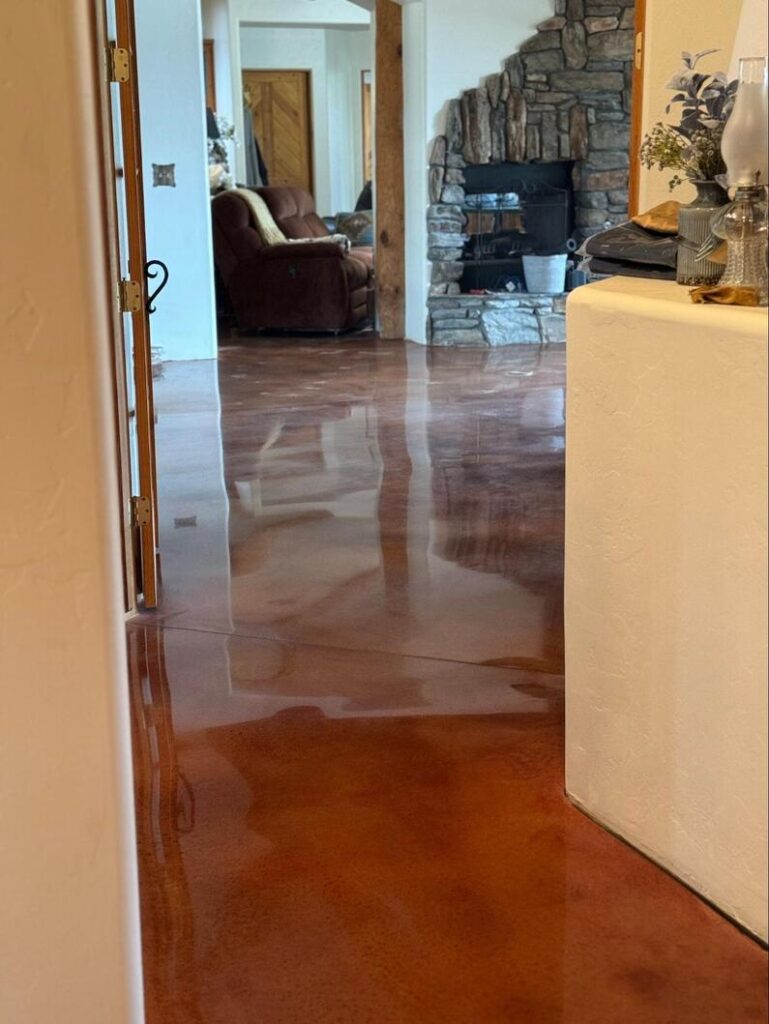
You have a lot of flexibility here. Epoxy comes in solid colors, metallic finishes, and flake blends. Most contractors offer dozens of flake color combinations so you can match your home’s aesthetic. Metallic epoxy uses pigment that swirls during application, creating a marbled effect that is popular in showrooms and upscale garages. If you want something with more texture and a natural stone look, pebble systems are another great option. Take a look at the best epoxy pebble flooring to see how that compares to standard flake systems.
What Does It Cost?
Pricing depends on square footage, surface condition, and the type of system you choose. Here is a general breakdown:
| Project Type | Square Footage | Estimated Cost |
|---|---|---|
| Single-car garage | 200 to 250 sq ft | $600 to $2,500 |
| Two-car garage | 400 to 500 sq ft | $1,200 to $5,000 |
| Basement floor | 600 to 1,000 sq ft | $1,800 to $9,000 |
| Workshop or utility room | 150 to 300 sq ft | $450 to $2,500 |
These ranges reflect professional installation. DIY kits exist, but they often use water-based products that are thinner and do not bond or last as well as 100% solids epoxy applied by a pro.
How Do You Maintain an Epoxy Floor?
Maintenance is one of the biggest selling points. You basically sweep or dust mop regularly and wet mop with a mild cleaner when needed. Avoid using soap-based cleaners because they leave a film. Strong acids can etch the surface over time, so stick to pH-neutral products. For scuffs or light scratches, a fresh topcoat can refresh the surface without starting from scratch.
Is It a Good Fit for Every Home?
Epoxy works best when the concrete is in reasonably good condition and moisture levels are under control. Concrete with active moisture coming up from below can cause adhesion issues down the line. A reputable contractor will test for moisture before starting the job. For a full look at everything this type of coating can do, check out Prescott, AZ epoxy coatings services to see what options are available for your specific space.
If you have a garage floor in particular, epoxy garage floor coatings breaks down everything you need to know about that specific application before you commit.
And if you are not sure whether epoxy or a coating product is even the right starting point, epoxy paint: what you need to know before your next project is worth a read first.
Frequently Asked Questions About Residential Epoxy Flooring
Epoxy can sometimes be applied over existing tile if it is firmly bonded, level, and properly prepared, but most contractors recommend removing tile first for the best bond. Damaged concrete needs to be repaired before coating. Cracks get filled, spalling gets patched, and the surface gets ground down to give the epoxy a clean profile to stick to. Skipping those repairs usually leads to peeling or bubbling within a year or two.
Solvent-based epoxy products do produce strong fumes during application, so the space needs to be well-ventilated while the crew works and for several hours after. Many professional installers now use low-VOC or water-based systems that reduce odor significantly. If you have respiratory sensitivities or children and pets in the home, ask your contractor what product they use and how long you should plan to stay out of the space before it is safe to re-enter.
Hot tire pickup is a real issue with lower-quality coatings, especially in garages that get very warm in summer. It happens when the heat from recently driven tires softens the coating enough to stick. A high-quality topcoat, particularly a polyaspartic or urethane finish, greatly reduces this risk. If you are parking cars on the floor regularly, make sure your contractor uses a commercial-grade topcoat designed for vehicle traffic, not just a decorative clear coat.
Expansion joints are there for a reason. They allow the concrete to move slightly as temperatures change without cracking. Most professional installers honor those joints by cutting the epoxy along the same lines and filling them with a flexible polyurea joint filler. That way the floor can still move without the coating cracking across the joint. Grinding over them or filling them with rigid epoxy is a shortcut that tends to cause problems later.
Epoxy does create a moisture-resistant surface that keeps liquids from soaking into the concrete from above. However, it is not a true waterproof membrane for moisture coming up from below. If your basement or garage slab has a high water table or active hydrostatic pressure pushing moisture up through the concrete, a standard epoxy system may delaminate over time. In those cases, a moisture-mitigation primer or a different system entirely may be needed before the coating goes down.
Both are high-performance coatings used on concrete, but they behave differently. Epoxy cures slowly, which gives installers more working time but means the floor is out of commission for longer. Polyaspartic cures very fast, sometimes in just a few hours, which makes it possible to do a full installation in a single day. Polyaspartic is also more UV stable, meaning it resists yellowing from sunlight better than standard epoxy. The tradeoff is that polyaspartic can be trickier to apply because of that fast cure time. Many installers use epoxy as the base and polyaspartic as the topcoat to get the best of both systems.
The Right Coating Makes All the Difference: Go With Prescott Epoxy
Residential epoxy flooring is one of the more practical upgrades you can make to a home. It protects your concrete, cuts down on cleaning time, and holds up to the kind of daily punishment that most flooring simply cannot take. The key is getting it installed correctly the first time, because a floor that peels or chips within a year is worse than no coating at all.
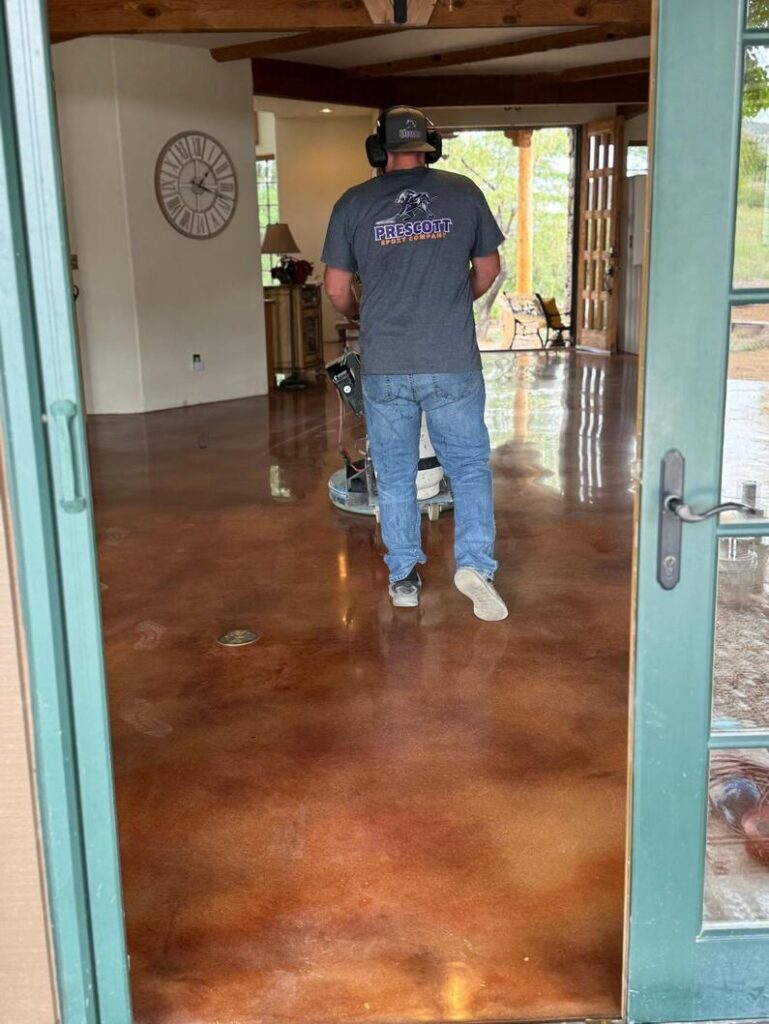
If you are in the Prescott area and ready to move forward, Prescott Epoxy has the experience and the products to get it done right. From prep to topcoat, the team handles every step so your floor comes out looking sharp and lasts for years. Reach out to get a quote and see what your space could look like with a professional-grade finish.