
Concrete polishing cost in Prescott, AZ comes down to three things: how much prep your slab needs, what gloss level you want, and how big the space is. There’s no flat rate that applies to every floor, since two garages the same size can price differently once you factor in slab condition. Here’s what actually moves your number, and how to get an accurate quote instead of guessing off a range you found online.
What Actually Shapes Your Concrete Polishing Price in Prescott
Every polished concrete job in Prescott starts with the same three variables: how much prep your slab needs, what gloss level you want, and how big the space is. Here’s how each one moves the needle.
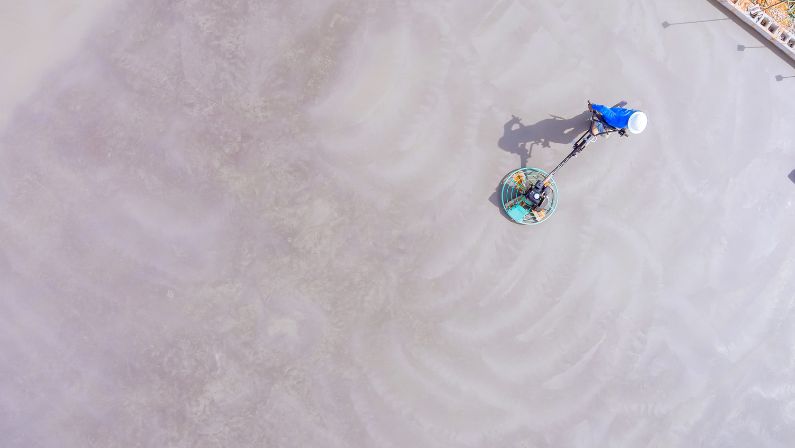
The process itself stays consistent no matter your budget: a free on-site assessment, deep grinding to remove old coatings and open up the concrete, lithium-silicate densifying, and polishing up to the gloss level you pick. Major concrete repair, if your slab needs it, gets scoped and quoted separately once we’ve seen the space.
What Drives the Price Up or Down
Slab Condition and Prep
Every job starts with a free on-site assessment that checks moisture readings, slab hardness, and the gloss you’re after. A slab with old paint, a failed coating, or heavy pitting needs more grinding passes before it’s ready, and that extra prep adds to the bill. A clean, sound slab moves through prep faster and costs less.
Gloss Level You Choose
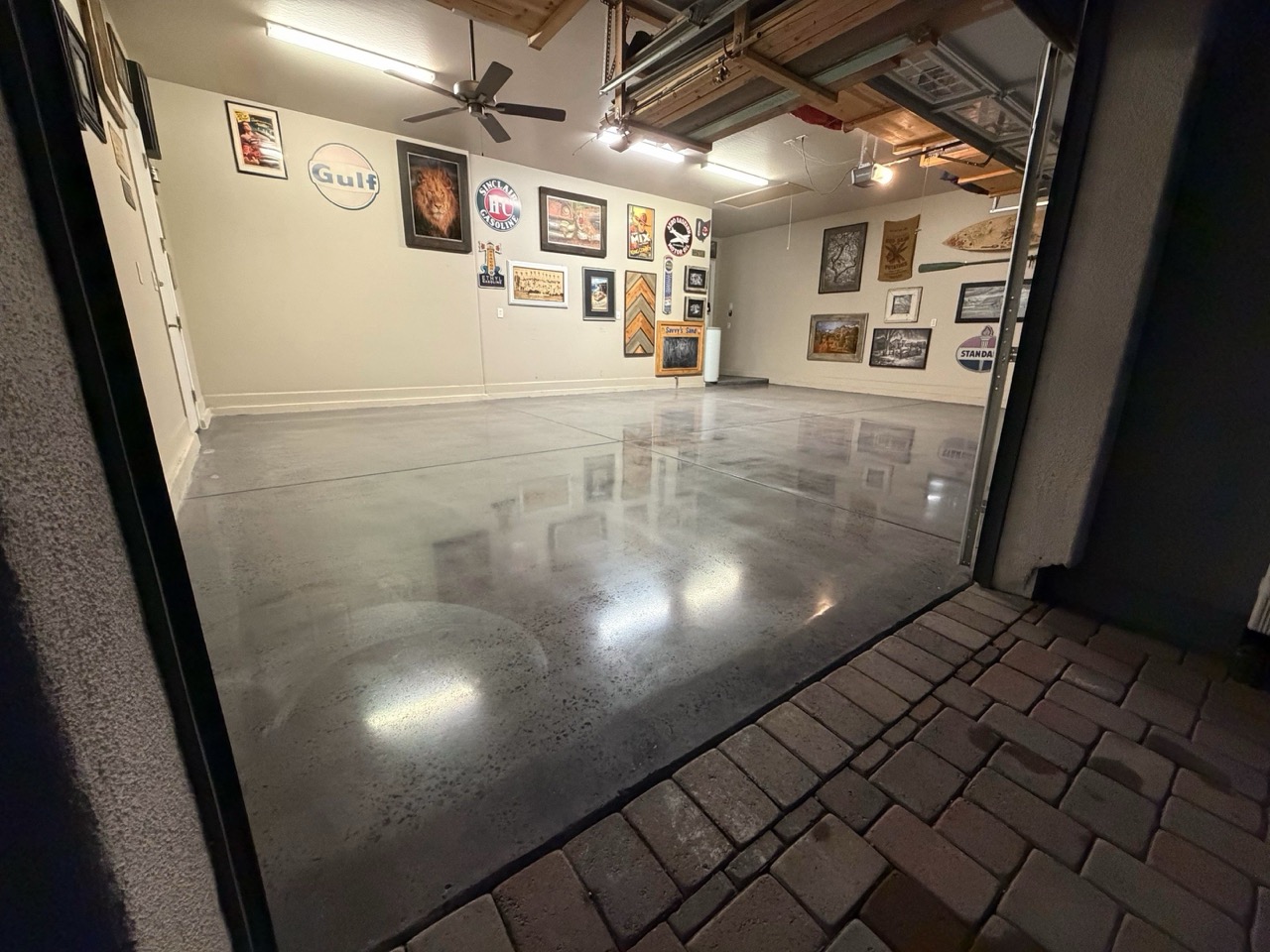
Gloss level is one of the biggest swing factors in concrete polishing cost in Prescott, AZ. A honed satin finish in the 400 to 800 grit range costs less because it takes fewer polishing passes and offers more traction, which is a real plus during Prescott’s icy winter mornings. Pushing toward a mirror finish at 3,000 grit means more passes with finer diamond tooling, which takes more time and adds to the price.
Square Footage and Space Type
Bigger spaces spread the cost of mobilizing the grinder, crew, and densifying chemicals across more square footage, so pricing efficiency usually improves as the job gets larger. A large commercial floor often prices more efficiently than a small garage, even though the total is higher.
Residential vs. Commercial Jobs
Commercial and industrial polishing jobs in warehouses, showrooms, and retail spaces move fast because crews work in bigger open areas without the tight corners and stored items you find in a garage. That efficiency helps keep pricing competitive, even on floors many times larger than a residential job. Our guide to commercial concrete polishing walks through what that looks like for business owners.
Polished Concrete vs. Epoxy: How the Costs Compare
Polished concrete and epoxy coatings solve a similar problem but get there differently, and pricing between the two comes down to prep and finish rather than one option being flatly cheaper. If you’re deciding between the two, our epoxy flooring cost guide breaks down the epoxy side, and here’s how they compare beyond the price tag.
| Factor | Polished Concrete | Epoxy Coating |
|---|---|---|
| Prep required | Diamond grinding, densifying | Diamond grinding, primer, base coat |
| Look | Natural concrete sheen, no color layer | Solid color, flake, or custom design |
| Maintenance | Dust mop, damp mop, annual burnish | Sweep and mop, avoid harsh chemicals |
| Lifespan | 10+ years with upkeep | 15 to 20 years professionally installed |
| Best for | Modern look, high-traffic commercial space | Color, texture, hiding an imperfect slab |
Neither option is automatically cheaper. The right choice comes down to the look you want and how the floor gets used day to day.
Hidden Costs to Plan For
A few line items can catch homeowners off guard if a quote doesn’t spell them out clearly. Moisture testing is part of every free assessment, but if the results show high moisture, a mitigation step gets added before densifying. Removing an old coating or paint before grinding takes extra passes and time. And if your slab has cracks or spalling, patching happens before polishing starts, which adds to both the timeline and the price. Getting a written quote that spells out prep, gloss level, and timeline up front is the best way to avoid a surprise bill.
Why Prescott’s Elevation and Climate Affect the Price
Prescott sits around 5,400 feet, with real winters, occasional snow, and freeze-thaw cycles that stress concrete more than a low-desert city like Phoenix. That’s part of why a honed satin finish with more traction is such a popular choice for garages here. Sedona’s climate runs milder, and the upscale market there leans toward higher-gloss, decorative finishes. Check out our concrete polishing services in Sedona page for what that looks like in a warmer part of the Verde Valley.
Concrete Polishing Pricing Across the Quad Cities
Pricing stays fairly consistent across the areas we serve, though slab condition and prep can shift a quote slightly. In Chino Valley, where larger rural properties and workshop space are common, jobs often run bigger simply because the garages and shops are bigger. Take a look at our concrete polishing services in Chino Valley page, or start with our concrete polishing services in Prescott page if you’re closer to town.
Getting an Accurate Concrete Polishing Quote
A real quote starts with a free on-site visit, not a number over the phone. Our team checks moisture readings and slab hardness, talks through the gloss level you want, and walks the space to catch anything that could add to the prep. You’ll walk away with a written quote that spells out the process from grinding through the final polish, so there’s nothing hidden in the fine print. For a broader look at the process from start to finish, our guide to concrete polishing covers what to expect.
Best Time of Year to Book Concrete Polishing in Prescott
Concrete polishing is indoor work, which makes it a strong option year round in Prescott. Spring and fall bring the busiest booking windows as homeowners tackle garage and shop projects in mild weather, so scheduling a few weeks out helps during those stretches. Summer stays steady too, since polishing happens inside an enclosed garage or building regardless of monsoon activity outside. Winter is actually a great time to get a polished floor done. Prescott’s cold, snowy stretches slow down outdoor concrete work, but an enclosed garage with a little heat keeps polishing on schedule, and a honed satin finish with more traction is a smart pick if you’re parking on it during icy mornings.
Is Polished Concrete Worth the Investment?
Polished concrete holds up to daily traffic without chipping or peeling the way a thin coating can. It cleans with a dry mop and an occasional damp mop using a pH-neutral cleaner, with an annual burnish to bring back the shine. Commercial owners also see a real efficiency bump, since polished floors reflect light better than dull concrete, which can cut lighting costs by as much as 30 percent in a warehouse or retail space. Every installation from Prescott Epoxy Company is backed by the same 10-year warranty that covers our epoxy work, so you’re not gambling on a floor that fades or wears through in year three.
Bottom Line on Concrete Polishing Cost in Prescott, AZ
Getting a straight answer on pricing comes down to prep, gloss level, and square footage, and now you know what actually moves that number. If you want an exact price for your space, stop by our showroom at 1030 Sandretto Dr, Suite K to see finished samples, or call (928) 800-8154 for a free estimate. We’ll walk your space, talk through gloss options, and give you a written quote with nothing hidden in the fine print.